

Klaviyo’s 2025 report, The Future of Consumer Marketing, surveyed more than 8,000 consumers based around the globe. And, 74% admitted that they expect a personalised experience from brands.
In fact, personalisation in online stores has become inescapable, and merchants that do not cater to individual consumer preferences tend to suffer the consequences.
But, is it possible to achieve this level of personalisation based on raw data? It is possible, but it requires a process called data harmonisation, which many online businesses are learning a bit too late.
What is Data Harmonisation?
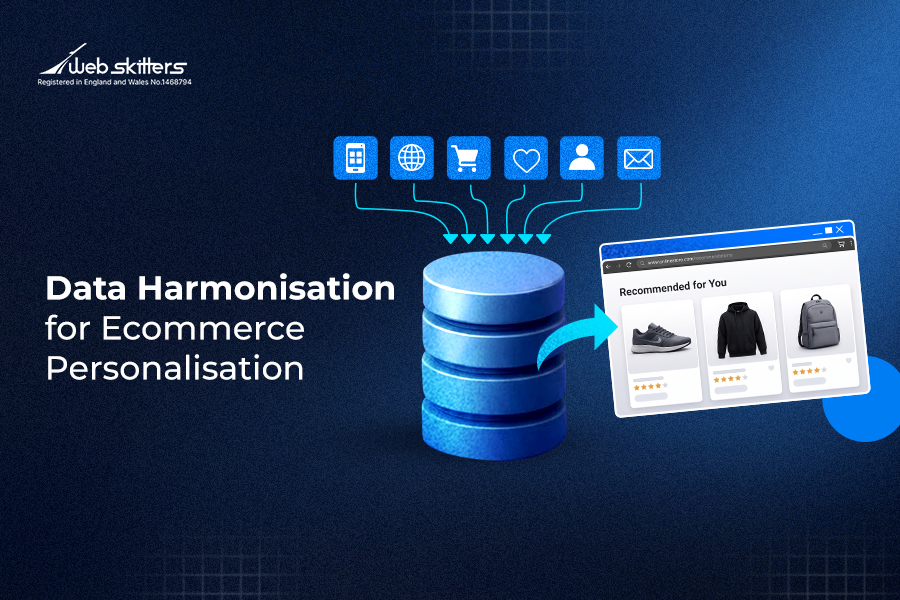
During the data harmonisation process, data from huge datasets are standardised and organised in an effort to ensure that they are consistent and comparable, enabling confident data-driven decisions.
Typically, data pulled from various sources is siloed, incompatible, disparate and unstructured. To provide value, it has to be rendered accessible through data harmonisation.
Say you run an online auto parts business, but your customer data is spread across disconnected systems. Now you may have a customer who regularly buys truck engine parts. But, since your business lacks usable data, that customer may receive promotions for motorcycle accessories.
With the right data harmonisation software and tools, merchants can easily create a standardised, single-source-of-truth data in consistent formats, naming conventions, semantic meanings, etc.
Key Dimensions of Data Harmonisation
Data harmonisation works across multiple, layered dimensions. At every level, the objective is to ensure information from different or even disparate systems becomes consistent, compatible, and meaningful for business use.
Some of these dimensions are:
|
Core Areas of Data Harmonisation |
||
|
Dimensions |
What It Standardises |
Example |
|
Syntactic Harmonization |
File formats and technical data types |
Standardising CSV, JSON, and date formats |
|
Structural Harmonisation |
Database structures and data hierarchies |
Aligning schemas across different systems |
|
Semantic Harmonization |
Definitions, units, and contextual meaning |
Converting currencies and measurement units |
How can Data Harmonisation be used for Online Stores
Those of you who own an online business are already aware of how competitive this landscape is. To ensure that your online store takes full advantage of the data you collect, let’s look at how data harmonisation can be used.
If you are interested in knowing about other ecommerce trends, you can also check: What’s Next for eCommerce in the UK? 10 Trends to Watch in 2026.
1. Unified Customer Profiles
HubSpot research shows that nearly 20% of marketers say building a truly data-driven marketing strategy remains a major challenge in 2026.
Sadly, it’s customers who have to pay the price.
It is quite annoying when a store sends you multiple ads for items you have already bought. To ensure this does not occur, Identity Resolution is done with the help of key tools.
This is just a way of linking a customer’s email, social media clicks, and web visits into one single profile. The shopping experience can feel much more personal without being uncomfortable.
Plus, it does not matter whether the customer interacted through an app, a website, or an in-store visit, as everything is taken into account.
2. Real-time Inventory Sync
There’s a reason why you need a single source of truth to sync your web store and stockroom instantly.
To understand this, let’s say one of your customers has purchased the last pair of canvas shoes from your online store. Now, if the warehouse system does not update the website immediately, the site will continue accepting orders for a product that is already out of stock.
Recent Shopify research shows that retailers who unify their data this way see a 23% higher inventory turnover because they can sell more accurately across every channel.
3. Consistent Marketing Messages
Your ads and your web store messaging need to be aligned. A lot of stores that do not use data harmonisation processes display mismatched messages on different channels.
You may have a Facebook ad that mentions a $20 price while your website says $25.
With harmonisation efforts, you essentially have a common framework that ensures that the data can be exchanged and used interoperably across systems.
So, since various software systems speak the same language, your pricing, promos and other marketing information remains consistent everywhere it is displayed.
It’s already an uphill task to get customers to trust online stores, but consistent messages are a very important way to build and sustain this trust.
4. Faster Product Management
We can agree that the faster you add new products to your store (basically expanding your inventory), the higher your sales and visibility will be.
Because data harmonisation involves semantic alignment, ecommerce stores are not forced to use manual input methods.
Suppose one supplier names a shirt ‘navy,’ while another calls it ‘midnight blue.’ ETL tools (Extract, Load, Transform) interpret the semantic meaning of these terms and automatically group them under the same category.
These types of issues can crop up for thousands of product listings. You cannot expect teams to manually fix them one at a time, as that would be time-consuming and increase the risk of human error.
Key Data Harmonisation Tools For Ecommerce Personalisation
Below are some of the top data harmonisation and integration platforms used by ecommerce businesses today.
1. Informatica
Large ecommerce ecosystems are bound to struggle when customer information exists across too many disconnected systems. Informatica can help.
-
AI-assisted mapping reduces manual integration work considerably
-
Handles large volumes of cross-channel customer information
2. Talend
One reason Talend stands out is its strong focus on data trustworthiness before data becomes usable. Ecommerce businesses frequently rely on it for personalisation because it can:
-
Profile incoming datasets before synchronisation begins
-
Identify duplicate or incomplete customer records automatically
-
Support cloud, hybrid, and on-premise environments flexibly
3. Fivetran
Fivetran appeals to teams that want smooth data harmonisation processes. Much of this tool’s integration process runs automatically. Fivetran can:
-
Automatically adapt when connected platform schemas change
-
Centralise behavioural and transactional ecommerce data efficiently
4. Boomi
Like many online store merchants, you may not want heavily code-dependent integrations. Boomi leans more toward low-code connectivity. It offers:
-
Drag-and-drop workflows simplify complex platform integrations
-
Synchronises CRM, shipping, inventory, and storefront systems
-
Improves consistency between operational and customer datasets
Choose the Right Ecommerce Personalisation Experts
What’s the point of the massive amount of customer/product data that your store collects if it is not being used to your advantage?
You can work with ecommerce data harmonisation experts to make sure that your store offers personalised shopping experiences for each individual customer.
Webskitters has worked with top ecommerce businesses, setting up streamlined data harmonisation processes that ensure actionable data insights.
Let us know more about your project requirements today.
Frequently Asked Questions
What is data harmonization in ecommerce?
Data harmonization is the process of standardising and combining data from different ecommerce systems into one consistent format for easier analysis, reporting, and personalisation.
Why is data harmonization important for personalisation?
Personalisation depends on accurate customer information. Data harmonization connects fragmented datasets so businesses can better understand customer preferences, behaviour, and purchasing patterns across channels.
How does data harmonization improve customer experience?
It helps businesses deliver relevant recommendations, accurate inventory updates, targeted promotions, and consistent interactions by ensuring all systems use the same customer information.
What are the advantages of data harmonization for online stores?
Data harmonization helps online stores use customer data more effectively, making shopping experiences feel far more relevant and connected.
-
More accurate product recommendations
-
Better targeted marketing campaigns
-
Consistent customer experiences everywhere
-
Faster reporting and business insights
