
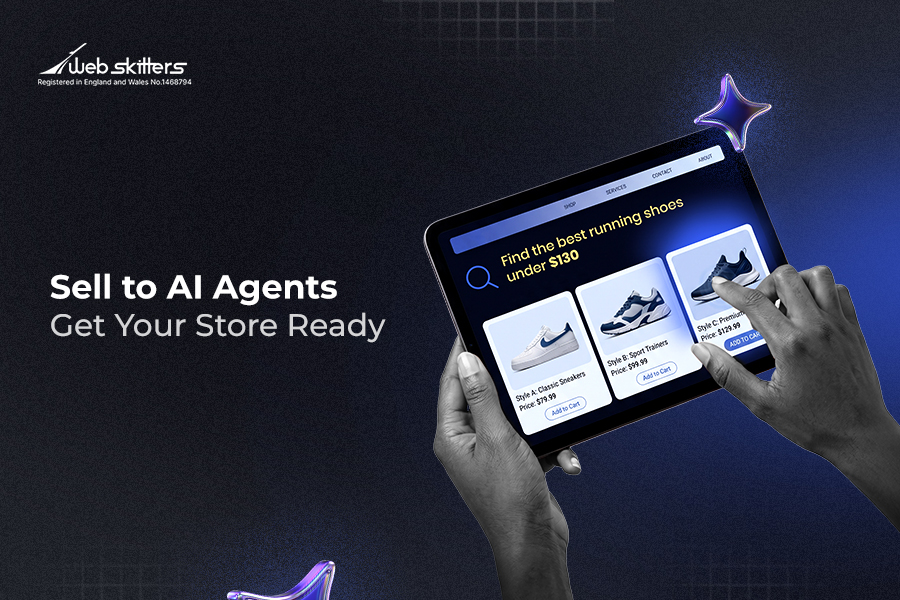

Wondering why AI-readiness is important for your ecommerce store?
Imagine a customer is fully relying on AI to find products and purchase them. Instead of visiting multiple websites, they’re simply asking an AI assistant to find a waterproof jacket under 100 euros, compare options, and recommend the best product. So, if your online store is AI-ready, modern search tools will automatically recommend you as the best option or the most valued platform to use for purchasing products relevant to specific user queries.
But if your store is designed for traditional browsing and centred on rankings, it may lack the real-time inventory data, structured product information, and integrations that AI-powered shopping experiences generally look for.
Preparing for this shift may first seem difficult, but as you move towards the end of this guide, you may discover a simplified pathway to success. Alongside this, investing in expert-led ecommerce development services can help strengthen your site’s infrastructure and prepare for evolving customer expectations.
So, let’s start with what agentic commerce readiness actually involves and how UK businesses can prepare for it without the need for a complete rebuild.
What Is Agentic Commerce?
Agentic commerce is referred to as an emerging shopping model backed by AI that helps customers discover, compare, and purchase products with ease and safety.
For example, when a customer will ask an AI assistant to compare running shoes based on comfort, price, delivery speed, and return policies, the assistant will quickly evaluate available product information, narrow the list, and recommend the most suitable options.
So, for retailers relying on traditional marketing, one of today’s biggest challenges is making product information understandable, accessible, and reliable for both customers and AI systems. However, agentic commerce UK retailers, specifically, can also think of this as an opportunity to grow because online shopping already plays a significant role in the retail market.
The Office for National Statistics (ONS) recorded online sales accounted for 28.8% of total retail sales in Great Britain in August 2026.
Note: This finding only reflects online retail’s performance, not the current adoption of agentic shopping.
How Should You Prepare Your UK Online Store?
1. Making Product Data AI-Ready
An AI shopping agent may find it difficult to compare your products if they don’t contain useful information. Inconsistent pricing, incomplete descriptions, and outdated stock levels can all contribute to harder product evaluation.
So, what you should consider first is addressing these common issues:
- Standardising Product Attributes: Incorporating size, colour, brand, dimensions, material, and other relevant specifications into product descriptions.
- Updating Prices and Stock: Making consistent information updates to inventory systems, product pages, and connected sales channels.
- Using Structured Data: Implementing accurate product structured data to make interpreting product details simple for search engines.
- Clarify Delivery and Returns: Publishing estimated arrival times, delivery costs, eligibility conditions, and return windows.
- Writing Descriptive Product Titles: Using specific names and relevant attributes for product titles.
For example, if you are a retailer that sells office chairs, you should focus on providing details about your products, like seat height, weight capacity, assembly requirements, and materials. This is what makes it easier for modern search engines to crawl through your offerings and compare them based on actual customer needs.
With accurate structured data, you can improve machine readability. But remember that it doesn’t guarantee AI agents discover or recommend a product from your stock.
2. Improving Visibility for AI Shopping Agents
Instead of replacing traditional SEO, consider combining it with AI readiness and finally upgrading your strategies. Because with SEO, keeping an ecommerce business ready to be found by AI-powered systems may seem incomplete.
According to the ONS, the use of AI among UK businesses with 10 or more employees increased to 35% in June 2026 from just 12% in late 2023. This finding measures AI adoption generally, not the specific use of shopping agents. However, one shouldn’t forget that this analysis explains the growing relevance of AI in day-to-day business operations.
So, to ensure your brand is found by AI shopping agents for ecommerce, here are some improvements to consider:
- Answering Specific Buying Questions: Incorporating an explanation about which product needs particular budgets, needs, and use cases.
- Creating Useful Comparison Content: Developing useful comparison content pieces so customers can understand differences between features, models, and price points.
- Maintaining Consistent Information: Ensuring product specifications, prices, availability, and policies agree across your website.
- Strengthening Internal Linking: Connecting product pages with relevant buying guides, categories, and support resources.
- Monitoring Emerging Discovery Channels: Putting product visibility, referral traffic, and conversions on track where reliable reporting is available.
Don’t focus on writing content solely for the purpose of attracting AI systems.
Consider developing clear, correct, and genuinely useful information to ensure both customers and AI platforms can discover your brand and products.
3. Check Your Ecommerce Platform and Integrations
Your existing site may already support many technical foundations required for agent-assisted shopping. But you need to prioritise what works, what doesn’t, and which areas need improvements.
Whether it’s Shopify, WooCommerce, or a custom-built platform, consider reviewing these areas:
- Inventory Synchronisation: Are stock levels updated promptly across all sales channels?
- APIs and Product Feeds: Are approved systems able to access the necessary product information?
- Order Management: Can orders, confirmations, fulfilments, and returns be handled appropriately?
- Checkout Compatibility: Are your payment and checkout processes supporting relevant integrations?
- Performance and Scalability: Are you able to store and manage additional requests without slowing down?
Wondering where AI ecommerce development can help?
AI-powered development can ensure product discovery, personalised recommendations, catalogue enrichment, and customer service automation for your business. However, these benefits will depend on your specific requirements.
What you should avoid: Adding a chatbot or recommendation engine because it doesn’t make your store ready for agent-driven purchasing.
4. Protecting Checkout, Payments, and Customer Permissions
If you are making your online store convenient for your customers, it should not come at the expense of their trust. If an AI agent is communicating with your store, it should have clear permissions and appropriate security controls to operate.
According to the UK government’s AI Adoption Research, 16% of UK businesses were discovered using at least one AI technology, and 7% of them were recorded using agentic AI.
These findings can help ecommerce businesses understand the need to distinguish basic AI functionality from more advanced agentic capabilities. So, before launching agent-assisted purchasing, implement the following safeguards:
- Explicit customer authorisation before purchases or other consequential actions.
- Protecting payment information and using trusted providers for that.
- Validating stock availability, prices, and order details before confirming transactions.
- Maintaining logs and clear processes to handle refunds, errors, and disputes.
- Establishing transparent ways for customers to review, cancel, or challenge authorised actions.
Here’s the simple goal: Make shopping more convenient for customers while ensuring complete control, privacy, or accountability.
5. Following a Practical Readiness Roadmap
Building your entire online store from scratch isn’t required. You just need a phased approach to make agentic commerce readiness easier to access, prioritise, and measure.
| Stage | What to do |
| 1. Audit | Review product data, structured data, inventory, checkout and integrations. |
| 2. Fix the foundations | Correct catalogue inconsistencies, improve descriptions and resolve technical issues. |
| 3. Choose a use case | Identify a specific opportunity, such as product discovery or guided comparisons. |
| 4. Pilot and test | Test the selected integration with a limited product range and clear permissions. |
| 5. Measure results | Track conversion rates, product discovery, order errors, customer satisfaction and support requests. |
The results from these can help you decide whether you should improve the integration, expand the pilot, or explore another use case. You should focus more on measurable outcomes than assumptions when it comes to emerging technology.
Common Mistakes Every Ecommerce Should Avoid
You may have a technically sound store. But if its underlying processes and information are unreliable, it can struggle to get results.
So, watch out for these mistakes:
- Relying on Structured Data Alone
Mark-up alone cannot compensate for unsupported integrations or incorrect product information.
- Ignoring Stock and Pricing Accuracy
If information is outdated, it can lead to poor recommendations and failed orders.
- Assuming Every AI Agent Supports Checkout
Not every AI agent can support checkout. Their capabilities vary by platform and implementation.
- Automating Without Clear Permissions
Customers should gain control over consequential transactions.
- Rebuilding Too Early
Don’t change your store’s architecture right away. Consider auditing it first.
Every retailer looking to dominate AI search experiences should take a measured approach to investing in capabilities that solve real operational problems and genuine customer concerns.
Closing Thoughts: Prepare for the Next Phase of Ecommerce
AI-powered systems can understand, interact with, and use your brand or products as a recommendation only when you display information that’s easy to understand and accessible and supports verifiable claims.
So, from maintaining accurate product data and improving technical foundations to strengthening integrations and protecting the checkout experience, consider doing everything to establish agentic commerce readiness.
But an ecommerce business chasing greater success may need more specialised help, and that’s why they should get in touch with Webskitters. We can assess website architecture and suggest improvements that can help your business unlock greater heights. Explore our ecommerce development solutions that align with both evolving digital commerce requirements and your goals.
Frequently Asked Questions
1. How is agentic commerce different from conversational commerce?
Conversational commerce focuses on customer interactions through chat or voice interfaces. Agentic commerce goes further by allowing AI agents to perform multi-step tasks, such as comparing products, checking availability and initiating purchases where supported and authorised.
2. Which ecommerce platforms support agentic commerce?
Shopify, WooCommerce and custom ecommerce platforms can support different AI-driven shopping capabilities through integrations, APIs and compatible tools. The available functionality depends on the platform, implementation and AI service being used.
3. Can small UK retailers benefit from agentic commerce?
Yes. Small retailers can begin by improving product descriptions, inventory accuracy, website accessibility and product feeds. These foundational improvements can support better discovery without requiring a large technology investment.
4. What product information do AI shopping agents need?
Depending on the use case, agents may need product names, descriptions, prices, stock availability, specifications, delivery estimates, return policies and product identifiers. Accurate, consistent information helps them compare options more reliably.
5. Can AI shopping agents purchase products without customer approval?
Purchasing capabilities vary by platform and integration. Retailers should establish clear authorisation requirements and ensure customers understand when an order will be placed, what it will cost and which actions the AI agent can perform.
6. How can retailers make product feeds suitable for AI-powered shopping?
Retailers should use consistent product attributes, valid identifiers, current pricing, accurate availability and clear delivery information. They should also follow the technical and feed requirements of each shopping platform or integration.
7. What challenges can retailers face when adopting agentic commerce?
Common challenges include inconsistent catalogue data, incompatible systems, limited integration support, privacy concerns, transaction security and uncertainty about measuring returns. Addressing these issues gradually can make implementation more manageable.
8. What should retailers consider before investing in agentic commerce?
Retailers should assess customer demand, platform compatibility, integration costs, data quality, security requirements and measurable business objectives. Starting with a focused pilot can help determine whether a proposed solution delivers sufficient value to justify wider adoption.
